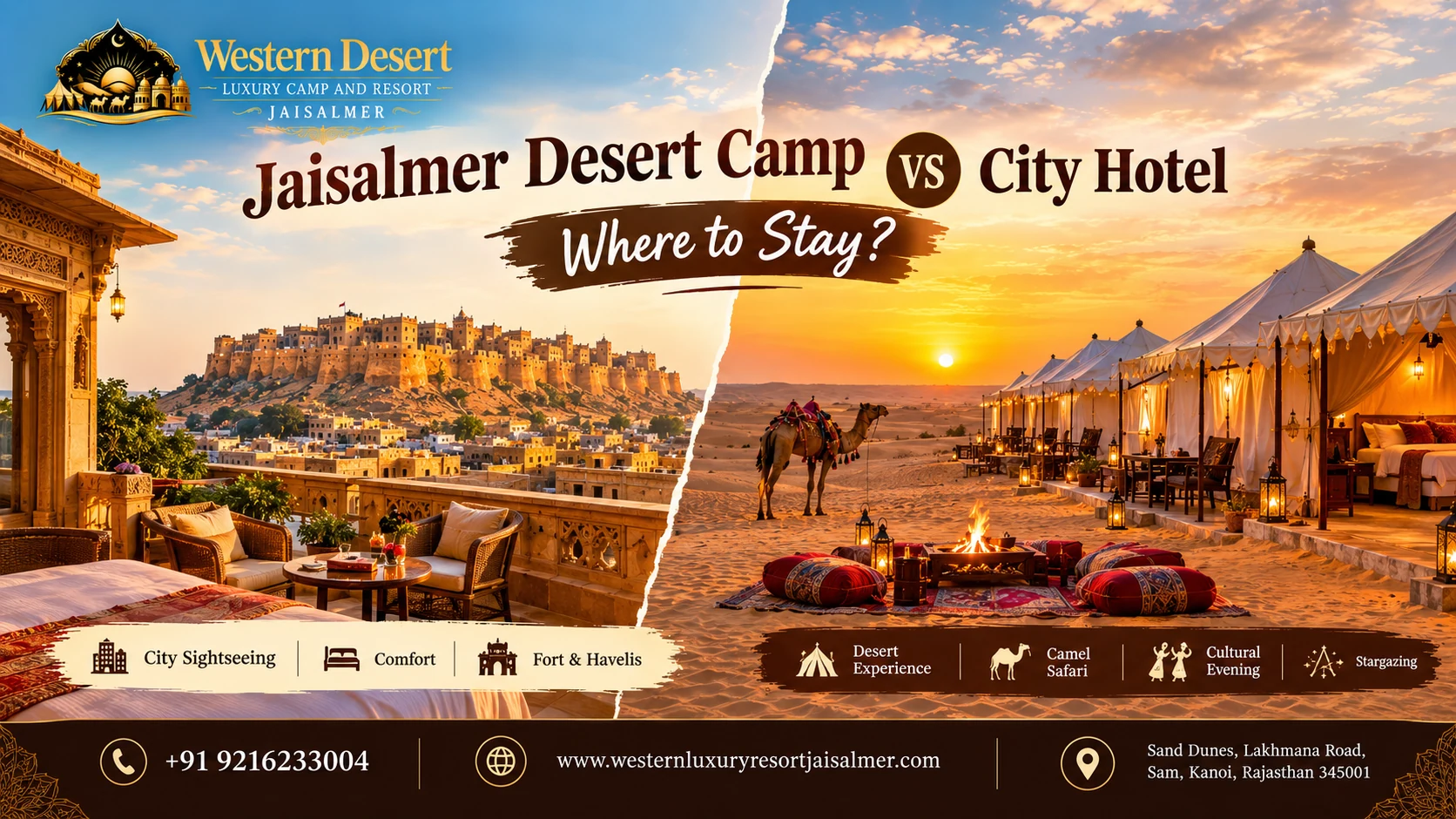


There's a particular kind of silence that settles over the Thar Desert once the sun drops behind the dunes. No traffic, no city hum, just wind moving sand from one ridge to another. If you've only seen Jaisalmer through photos of golden forts and camel silhouettes, staying in a luxury Swiss tent near Sam Sand Dunes is what turns that postcard into something you actually feel.
Swiss tents have quietly become the default way to experience the desert properly. They solve a real problem: the dunes are the whole point of a Jaisalmer trip, but nobody wants to give up a comfortable bed, a working shower, or air conditioning to sleep near them. A good desert camp in Jaisalmer gets you both. You get canvas walls and starlit skies on the outside, and a proper hotel room on the inside.
What Exactly Is a Swiss Tent?
The name confuses people at first. A Swiss tent has nothing to do with Switzerland. It refers to a tent design, originally used in colonial-era hunting camps, built on a raised wooden or stone platform with a peaked canvas roof, solid walls, and a proper door. Unlike the pop-up tents you'd take camping, these are semi-permanent structures with real furniture bolted down inside them.
Walk into one at a decent Jaisalmer property and you'll usually find:
- A king or queen bed with proper linens, not a sleeping bag
- An attached bathroom with hot water, sometimes a bathtub in the pricier tents
- Air conditioning or a cooler, plus heating for winter nights (desert nights get cold, colder than most first-time visitors expect)
- A small sitting area, sometimes a private deck facing the dunes
- Round-the-clock electricity, unlike the basic camps that cut power after midnight
The "luxury" tag matters here. Budget desert camps near Sam exist too, and they can be fine for a night if you're not fussy. But the difference between a Rs. 2,000 tent and a Rs. 15,000 one is enormous once you factor in bedding quality, bathroom cleanliness, and whether the staff actually show up when you need something.
Why Sam Sand Dunes Specifically
Jaisalmer has a few dune fields, but Sam is the one everyone means when they say "sand dunes." It sits about 40 kilometers west of the city, right along the edge where the Thar starts to feel genuinely vast. Khuri, a bit further south, is quieter and less commercial if you want to skip the crowds. Most of the well-known luxury tent stays near Sam Sand Dunes cluster around this stretch because it has the tallest, most photogenic dunes and easy road access from the city.
Staying right at Sam instead of commuting from a Jaisalmer city hotel changes the whole rhythm of the trip. You're not stuck in a jeep at 5 p.m. racing sunset traffic back to your dune of choice. You walk out of your tent, and the desert is already there.
What a Night at a Luxury Desert Camp Actually Looks Like
Most properties run a fairly similar routine, though the good ones add their own touches.
Afternoon check-in. You arrive by late afternoon, get shown to your tent, and have time to settle in before the light starts changing. This is also when staff usually explain the evening schedule and any optional add-ons like quad biking or paramotoring over the dunes.
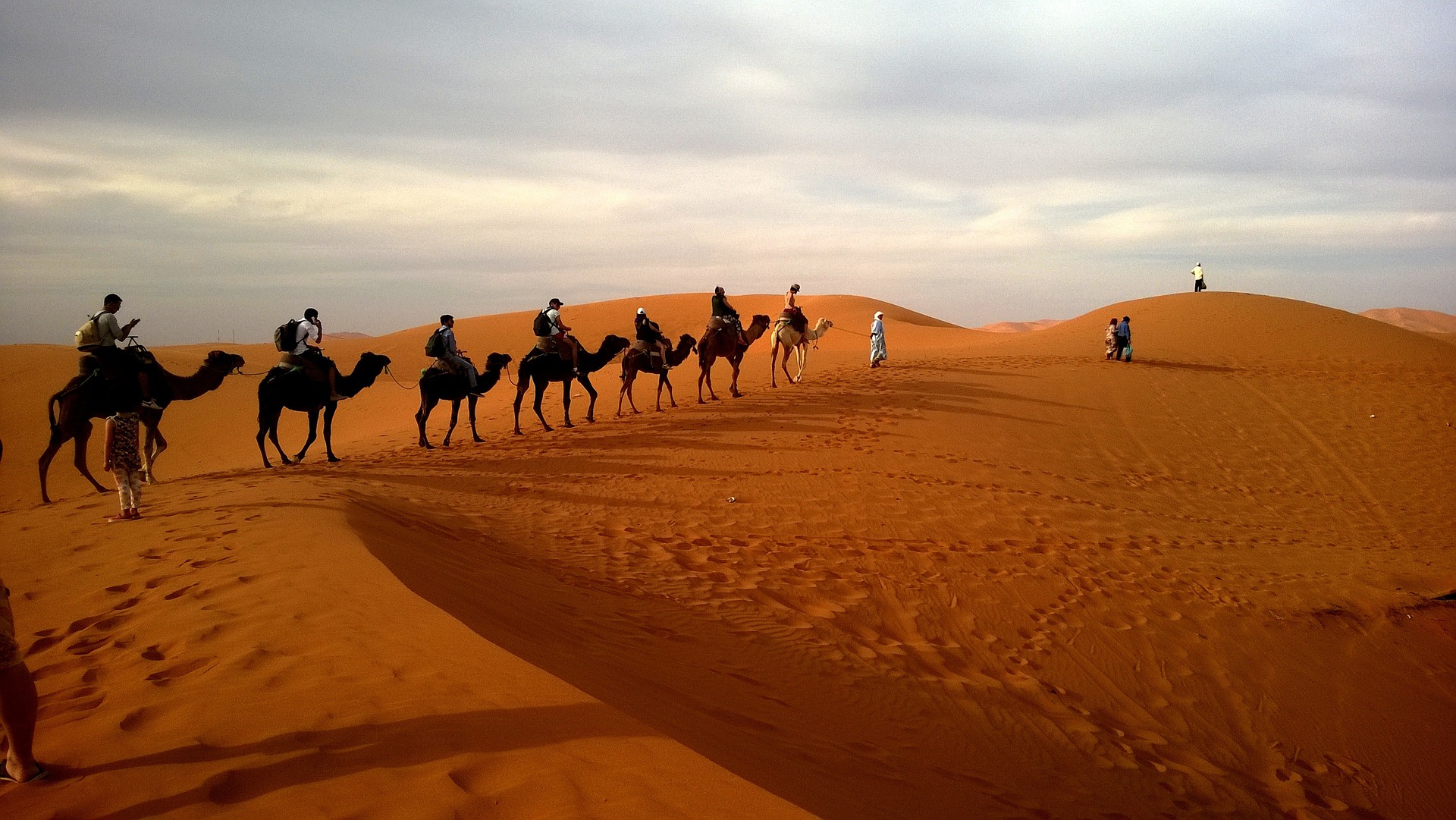
Sunset on the dunes. Camel or jeep rides out to the open dune area are standard, timed for golden hour. This is the moment that ends up on everyone's Instagram, and honestly, it earns the hype. The dunes catch color in a way flat desert doesn't.
Cultural evening. Back at camp, dinner is usually a buffet of Rajasthani dishes, dal baati churma being the one nobody skips, served around a bonfire with live folk music and Kalbelia dance performances. Some camps do this well with genuine local performers; others phone it in with a recorded playlist. Worth checking reviews for this specifically if it matters to you.
Stargazing. Away from city light pollution, the sky at Sam is genuinely dark. Some higher-end camps set up telescopes or at least point out constellations. Even without that, lying back on a dune at 10 p.m. is reason enough to book the trip.
Morning. Sunrise over the dunes, then breakfast, then checkout by late morning. A few camps offer a second night at a discount if you want a slower pace, which is worth asking about since the first night can feel rushed.
If you're building out a full trip, it pairs naturally with a Jaisalmer itinerary that includes a day at the fort and Patwon Ki Haveli before you head out to the dunes.
Picking the Right Camp: What Actually Matters
Reviews online tend to blur together after a while, so here's what's worth checking specifically before you book.
Distance from the actual dunes. Some properties advertise as being "near Sam Sand Dunes" but are a 20-minute drive away. Ask directly, or check the map pin, not just the listing name.
AC and power backup. Desert power cuts happen. A camp worth its price tag has a generator that kicks in fast, not one that leaves you sweating for an hour.
Bathroom quality. This is the single biggest gap between mediocre and good camps. Ask for recent photos if the listing ones look old.
Meal inclusions. Most packages are full board (breakfast, lunch, dinner) but confirm whether drinks, the camel ride, and cultural show are included or charged separately. Some camps nickel-and-dime activities that should be standard.
Group size and privacy. Larger camps can feel like a wedding hall some nights, especially in peak season (October to February). Boutique camps with fewer tents cost more but feel far more private.
Best Time to Book a Desert Camp Stay
Jaisalmer's tourist season runs roughly October through March. December and January are the busiest and the most expensive, partly because of the Desert Festival that typically falls in late January or early February, and partly because it's the only time nights are genuinely comfortable rather than brutally cold or scorching hot.
Summers (April through June) push daytime temperatures past 45°C, and most camps either shut down or run at a fraction of capacity. If you're set on visiting off-season, book a camp with strong AC and confirm they're actually operating before you travel out from the city.
Shoulder months, September through early November and again in March, offer a decent middle ground: fewer crowds, lower rates, still pleasant enough temperatures for the evening bonfire and dune walk.
What It Costs
Pricing varies a lot depending on season and how "luxury" the luxury actually is.
- Budget-to-mid tents: roughly Rs. 3,000–6,000 per night, usually with shared or basic attached bathrooms
- Proper luxury Swiss tents: Rs. 6,000–15,000 per night, including full board and the standard evening program
- Premium or resort-style tents with private pools, butler service, or heritage branding: Rs. 15,000 upward, sometimes well upward during peak season
Rates typically spike hard around New Year's Eve and the Desert Festival dates, so booking a couple of months ahead makes a real difference in both price and availability.
A Few Honest Downsides
Not everything about desert camping is postcard-perfect, and it's worth knowing this going in. Wind can pick up sand into everything, tents and all, especially in the open dune areas. Wi-Fi is patchy to nonexistent at most camps, which some people love and others find frustrating if they're trying to work remotely. And the cultural show, while usually enjoyable, can feel a bit repetitive if you've already seen a similar setup elsewhere in Rajasthan. None of this should stop you from going. It's just worth knowing the desert doesn't fully bend to five-star expectations, even when the tent itself does.
Frequently Asked Questions
1. How far is Sam Sand Dunes from Jaisalmer city? Sam is about 40 kilometers from Jaisalmer, roughly a 45-minute to one-hour drive depending on traffic and road conditions. Most camps arrange pickup and drop from the city or the airport.
2. Are Swiss tents safe for families with kids and elderly travelers? Yes, luxury Swiss tents are generally comfortable for both. They have proper beds, attached bathrooms, and climate control, which makes them far more manageable than basic camping for kids or older travelers. Just check that the specific camp has ramps or ground-floor tents if mobility is a concern.
3. Is one night at a desert camp enough, or should I book two? One night covers the essentials: sunset, dinner, bonfire, sunrise. Two nights lets you relax the pace, skip the rushed first-evening feeling, and maybe catch a second, quieter sunset walk without the group activities attached.
4. Do Swiss tents have attached bathrooms and running hot water? Most luxury and mid-range Swiss tents do, yes. It's worth confirming for budget options specifically, since some cheaper camps still use shared bathroom blocks a short walk from the tents.
5. What should I pack for a night in a desert camp? Warm layers for winter nights (temperatures can drop into single digits Celsius from November through February), sunscreen and a hat for the daytime heat, comfortable closed shoes for the dunes, and a scarf or bandana if you're sensitive to blowing sand. A power bank is handy too, since outlets in the tent may be limited.