
Most people picture Diwali the same way: strings of lights along a city street, firecrackers going off somewhere close by, a living room full of family and too many sweets to actually finish. That's a good Diwali. It's just not the only one. A few hundred kilometers west of most of that noise, the Thar Desert has its own version of the festival, and it runs on a completely different rhythm. No traffic jams, no crowded markets to fight through, just diyas glowing against sand instead of pavement, and a sky that does most of the decorating on its own.
If you've been searching for something to do for Jaisalmer Diwali this year, here's what the desert version of the festival actually looks like, why it's worth considering over a hometown celebration, and how to plan a trip around it.
Why Diwali Feels Different in the Desert
Diwali is fundamentally about light pushing back the dark, and nowhere does dark quite like the open desert. In most cities, the festival competes with streetlights, headlights, and neon shop signs that never really switch off. Out past Sam Sand Dunes, there's none of that. When the sun drops and the diyas get lit, they're the only light source for miles, and that changes how the whole thing feels. A single row of oil lamps along a dune ridge looks more dramatic against total darkness than the same row would ever look on a city street.
There's also the matter of scale. A city Diwali is loud, crowded, and honestly a little chaotic, in a way that's part of the charm if you grew up with it. A desert Diwali strips a lot of that back. Fewer people, more space, and a stillness that makes the ritual side of the festival, the actual lighting of lamps, the prayers, the quiet moment before everyone starts eating, feel more like the point than the backdrop.
None of this makes a desert Diwali better than a family one at home. It's a different kind of celebration, built for people who want to experience the festival somewhere they've never seen it before, or who simply want a Diwali that isn't tied to a specific house or a specific set of relatives this year.
When Diwali Falls in 2026
Diwali follows the lunar calendar, so the date shifts every year rather than landing on a fixed day. In 2026, the main celebration, Lakshmi Puja, falls on Sunday, November 8, with the broader five-day festival running from Friday, November 6 through Tuesday, November 10. Dhanteras opens the stretch, Choti Diwali follows the next day, then the main event, then Govardhan Puja and Bhai Dooj close things out.
That timing lines up well with Jaisalmer's most comfortable travel season. Early November sits right at the start of the region's cooler months, when daytime temperatures are still pleasant and nights have started dropping enough to make sitting outside after dark genuinely comfortable rather than something to power through. If you're building a trip around the festival, that overlap is worth taking advantage of.
What Diwali Actually Looks Like at a Desert Camp
Strip away the location, and the core rituals of Diwali stay the same wherever you are. What changes is the setting they happen in.
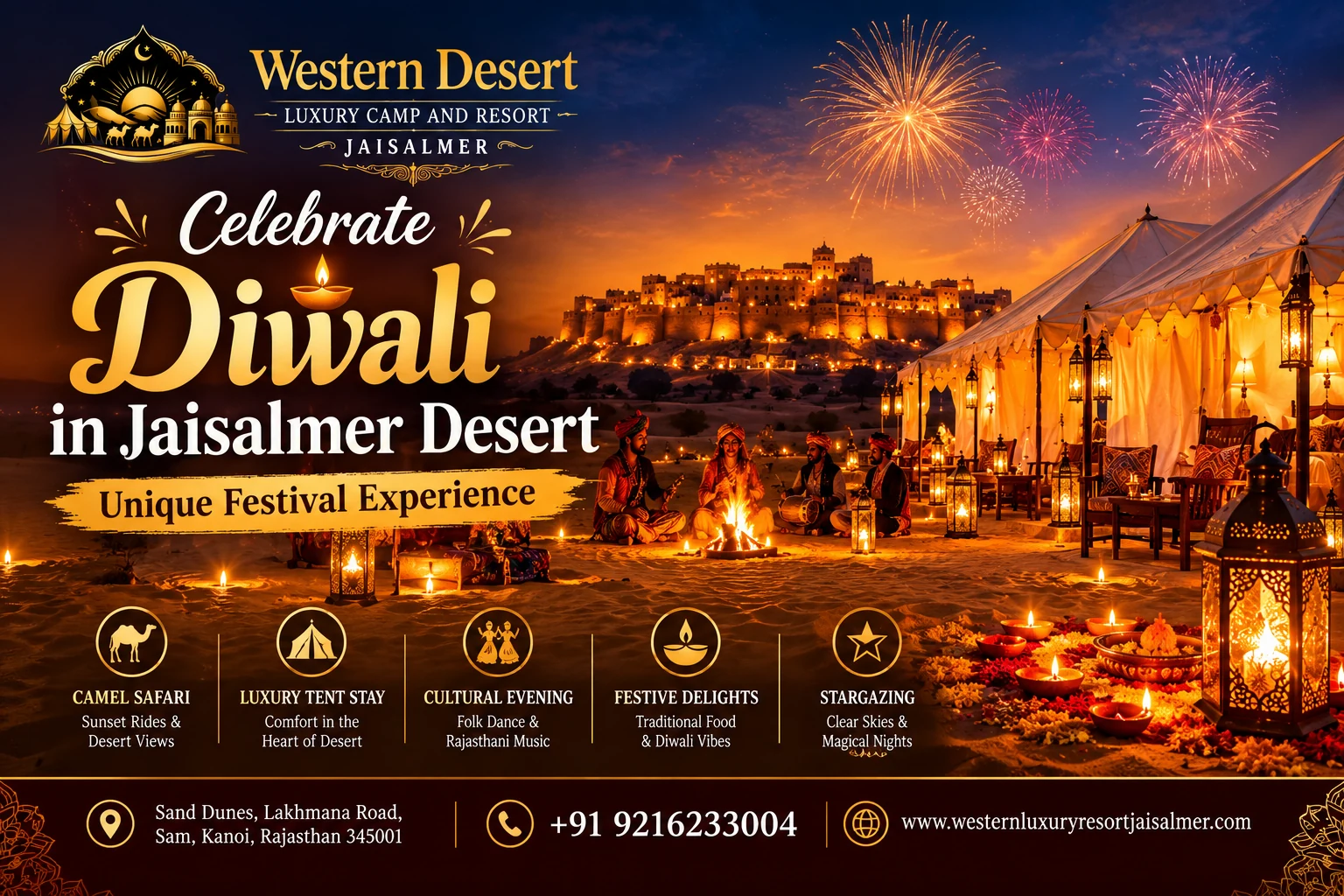
Rangoli gets drawn at the camp entrance using colored sand and flower petals rather than the chalk powder you'd see in a city courtyard, which fits the desert surroundings in a way that feels intentional rather than improvised. Diya lighting happens at dusk, with rows of small clay lamps set out along the paths between tents and sometimes up along the nearer dune ridges, so the light spreads across the sand rather than staying confined to one spot.
Evenings usually build toward a cultural program that leans into regional tradition rather than a generic festival set. Live folk music, Kalbeliya dance performed around a fire, sometimes a puppet show if there are families in camp. Dinner follows a similar logic. Rajasthani thali spreads, seasonal sweets, the kind of food that shows up specifically during Diwali and not much else during the year. Given how dry the desert stays and how quickly a spark can travel across sand and canvas, most camps keep fireworks minimal or skip them entirely, leaning instead on the lamps and the fire show for visual impact. It's worth asking directly if fireworks matter to you, since policies vary by camp and by year.
The other thing worth knowing: the desert doesn't go quiet after the official program winds down. Once the music stops and dinner's cleared, what's left is a genuinely dark sky, the kind most visitors have never actually seen. Diwali being tied to the new moon only helps here, since there's no moonlight competing with the stars. A lot of people end up spending the last hour of the night just looking up, which sounds simple until you're actually out there doing it.
A Sample Diwali Evening in Jaisalmer
There's no single fixed itinerary for a desert Diwali, but most evenings follow a similar shape once you're staying at a camp near the dunes.
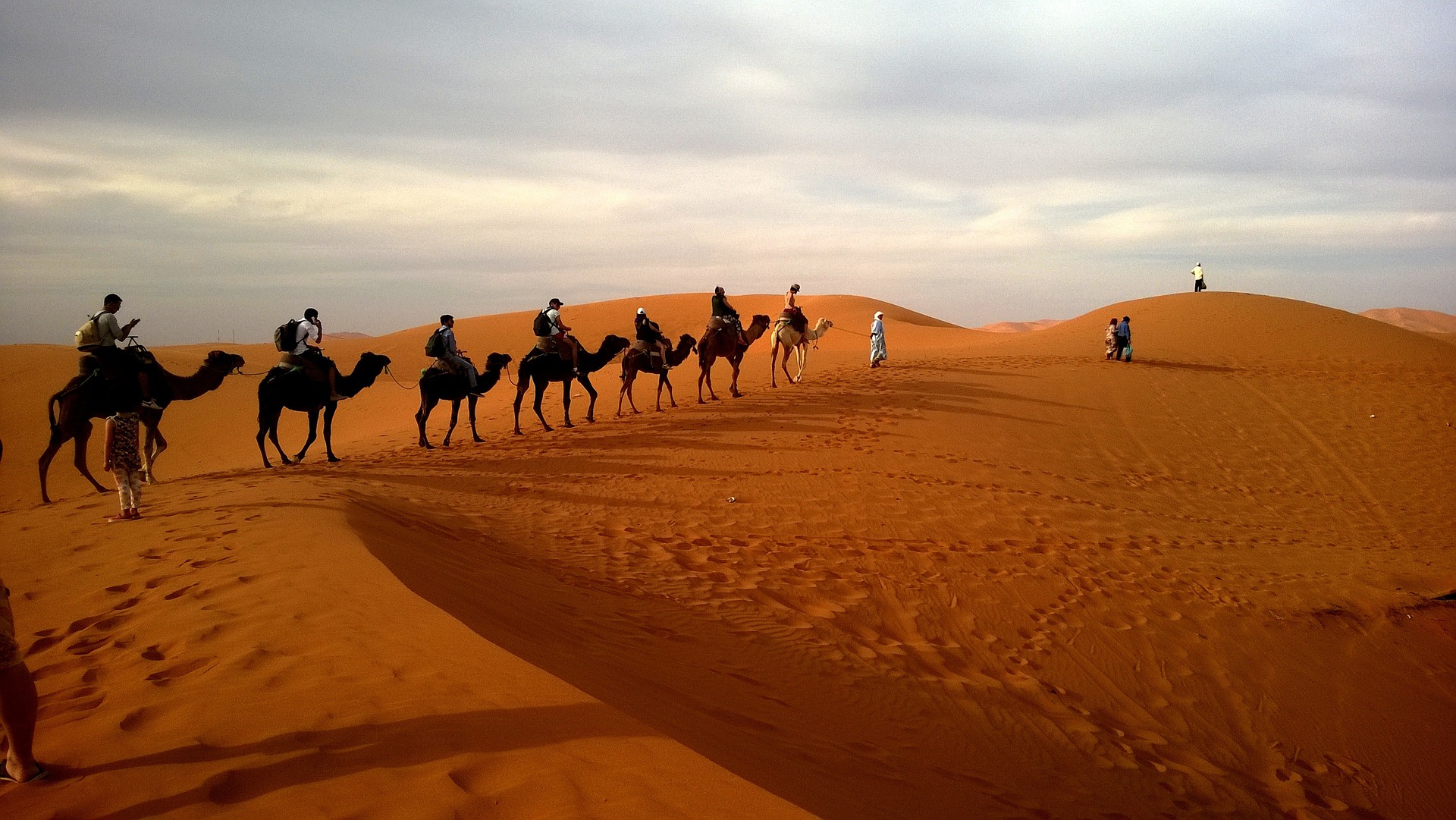
Late afternoon usually starts with a camel safari timed for sunset, which works particularly well around Diwali since the light hits the dunes at an angle that makes the whole ride feel more cinematic than usual. Back at camp, the rangoli and diya setup is typically in place by the time you return, so the transition from safari to festival happens without much of a gap.
Dinner and the cultural program follow once it's fully dark, folk music, dance, and a Rajasthani meal built around the occasion rather than the standard nightly menu. After that, the evening tends to loosen up. Some guests join the music, some head off to find a quiet spot on the sand to watch the sky, and a few just sit by the fire a while longer than planned. There's less structure to the back half of the night than the front half, and that's generally by design.
If you're traveling as a family with younger kids, it's worth asking the camp specifically about their fireworks policy and what time the cultural program tends to wrap up, since younger children may not make it through a full late-night session.
Why This Works Especially Well for Couples and Small Groups
Diwali at home is usually a big, extended-family affair, which is exactly why some people look for something different. A desert camp strips the guest list down to whoever you actually traveled with. For couples, that often means a Diwali that's quieter and more private than anything possible at home, especially if the camp offers a separate dinner setup away from the main group program.
Small friend groups get a different version of the same benefit. Instead of splitting Diwali evening across several family houses the way most people do at home, everyone's in one place, doing one thing, for the whole night. It tends to make the festival feel more like a shared event and less like an obligation squeezed between other plans.
Practical Tips for a Jaisalmer Diwali Trip
A few things are worth sorting out before you book, especially since Diwali sits during one of Jaisalmer's more popular travel windows.
Book early. Early November overlaps with the start of peak season anyway, and Diwali specifically pulls in a wave of domestic travelers looking for exactly this kind of trip. Waiting until a few weeks out often means settling for whatever's left rather than the camp or package you actually wanted.
Pack for a temperature swing. Days in early November are still warm enough for a t-shirt, but nights have already started cooling off noticeably. A light jacket or shawl makes the evening's outdoor activities far more comfortable than trying to push through the cold in something too thin.
Ask about the specific Diwali program. Not every camp runs an identical evening. Some lean harder into the cultural performance side, others focus more on the lamp-lighting and quiet stargazing side of things. If one matters more to you than the other, it's worth confirming ahead of time rather than assuming.
Confirm fireworks policy if it matters to your group. Given the dry conditions, plenty of desert camps limit or skip fireworks entirely, replacing the visual spectacle with lamps and fire performances instead. If a firework display is part of what you're picturing, check directly rather than assuming it's included.
Why the Desert Setting Adds Something a City Diwali Can't
There's a reason people keep coming back to the same idea when they talk about desert festivals: the emptiness itself is part of the experience. A city Diwali is defined by density, more lights, more noise, more people doing the same thing at the same time, all competing for attention. A desert Diwali runs on the opposite principle. Fewer lights mean each one actually stands out. Less noise means the music and the crackle of the fire carry further than they would anywhere else. And a night sky with genuinely no light pollution turns the festival's core symbolism, light overcoming darkness, into something you can watch happen in real time rather than something you just say out loud during the puja.
It's not a replacement for a family Diwali. It's a different kind of celebration, built for the years when a change of scenery matters more than tradition tied to a specific address. If that's what you're looking for this year, Jaisalmer's desert camps are set up to deliver exactly that.
Frequently Asked Questions
1. When is Diwali celebrated in Jaisalmer in 2026?
Diwali 2026 follows the same national dates as the rest of India, with the main Lakshmi Puja falling on Sunday, November 8, and the full five-day festival running from November 6 to November 10. Desert camps typically run their main cultural programs around the main Diwali night itself.
2. Are fireworks part of the desert Diwali celebration?
It varies by camp. Given how dry the desert stays, many camps limit or skip fireworks entirely and lean on diya lighting, rangoli, and fire performances instead. It's worth confirming a specific camp's fireworks policy directly if that matters to your group.
3. Is a desert camp Diwali suitable for families with young children?
Generally yes, though the cultural program and stargazing portions can run late into the night. If you're traveling with younger kids, it helps to ask the camp about program timing in advance so you can plan around bedtime if needed.
4. Do I need to book a Jaisalmer Diwali trip well in advance?
Yes. Early November falls right at the start of Jaisalmer's peak travel season, and Diwali specifically draws extra demand from domestic travelers. Booking a few weeks to a couple of months ahead is safer than waiting until closer to the date.
5. What should I pack for a Diwali trip to the Jaisalmer desert?
Light clothing works fine during the day, but temperatures drop noticeably after sunset, so a jacket or shawl is essential for the evening's activities. It's also worth packing something festive if you want to join in the cultural program, since many camps encourage traditional dress for the occasion.